
Sir William Walton
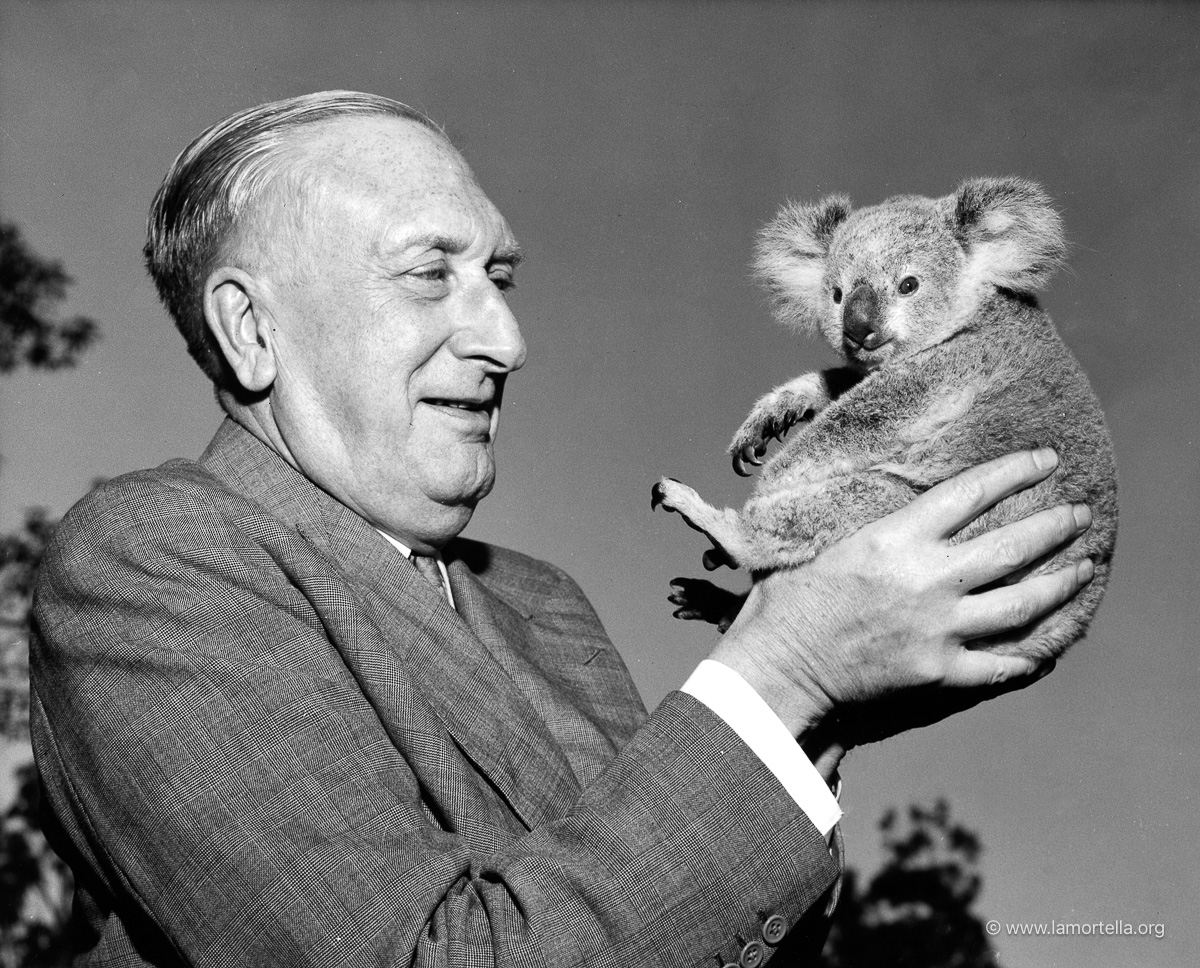
Sir William Walton was born in the provincial town of Oldham in 1902, the son of not-very-off parents with a musical background, but his talent and determination took his music well beyond the confines of his hometown.
As a boy, he studied at the choir school at Christ Church, Oxford. During these years, both his ability to attract patrons and the bittersweet romanticism of his music began to emerge.
In his late teens, he composed his first Quartet for Piano and Strings and gained the favour of the aristocratic Sitwell family.
This friendship and Walton's ability to find inspiration in his surroundings and contemporary music led to the composition of the popular and witty Façade and the nautical comedy overture Portsmouth Point.
Even as a young composer, he demonstrated remarkable versatility, creating works such as the biblical cantata Belshazzar's Feast and the score for the film adaptation of Shakespeare's As You Like It (1936).
In his youth, he also travelled extensively, visiting Italy, Switzerland, and the United States. As an established composer, his work continued to be characterised by a wide thematic and stylistic range, while remaining both distinctly English and internationally relevant.
Walton composed vocal music, works for royal occasions such as the coronation march Crown Imperial, commissioned for the coronation of King George VI and Queen Elizabeth in 1937, as well as scores for Shakespearean adaptations including Laurence Olivier's Richard III (1955), powerful symphonies, and operas such as Troilus and Cressida and The Bear.
Although known for his reserved nature, Walton was very much part of the British establishment and artistic world of his time. He was knighted in 1951 and was a member of the Royal Academy of Music and the Performing Right Society.
In these gardens, developed through the vision of landscape architect Russell Page and Lady Walton, he composed his final major work, Prologo e fantasia, an orchestral piece full of characteristic Waltonian energy.
There, he also laid the foundations of the William Walton Trust, created to support young musicians and to make his work widely accessible to the public.
Sir William Walton died at La Mortella on 8 March 1983, at the age of 80, leaving behind a musical and cultural legacy of international significance.